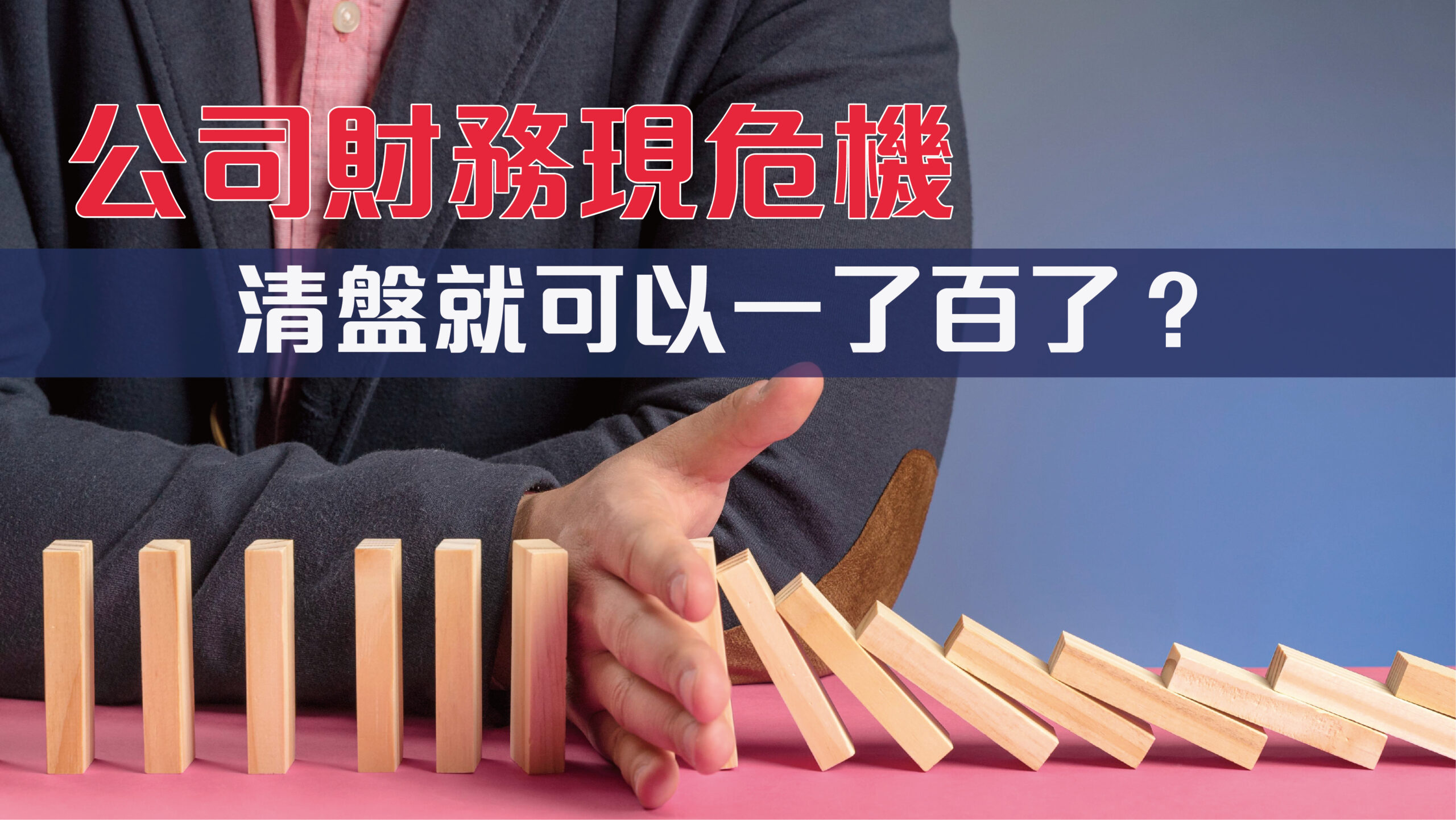
Is Liquidation the only way out for Company?

Who is not ambitious at the beginning of a business, but the business field is turbulent, plus various unpredictable external factors, it is not easy to stand firm! If the business cannot continue, or is even heavily indebted, is closing down the company be the only way?
Liquidation or deregistration of the company? Conditions, procedures, costs vary widely
Regardless of the company’s closure, dissolution, or bankruptcy, as long as the company does not continue to operate, the owner can choose to liquidate or deregister the company’s name. The application requirements, procedures and costs of the two are quite different. A company closing application for deregistration, which is an application to remove the company name from the company register, must be approved in advance by all shareholders of the company, and it is carried out without unpaid debts. At the same time, a notice must be published in the Government Gazette stating that unless an objection is raised, the company will be formally removed and dissolved three months after the date of the notice. Note that, before the official deregistration, it is also necessary to fulfill the responsibilities stipulated in the Companies Ordinance, such as, submit an annual return and prepare audited financial statements.
Company liquidation is divided into “voluntary liquidation” and “compulsory liquidation”
Legally, only a “limited company” can apply for liquidation. Based on the principle of limited liability, debts will not be transferred to shareholders, and the debts will be repaid with the value of the company after liquidation. “Voluntary winding-up” means that the company has the ability to repay its debts with assets within one year. It is proposed by the shareholders and notified to the Companies Registry for winding-up, and the winding-up party officially starts. Before starting the liquidation, the company must pre-appoint a liquidator to supervise and assist in the liquidation of the company’s assets. The “compulsory winding-up” means that the company’s shareholders or creditors submit a winding-up petition, and the company is unable to settle the outstanding debts of HK$10,000 or more, and then the court decides to force the winding-up. Note that when a company begins winding-up proceedings, the company must cease all business operations and cannot transfer shares or transfer funds.
There are costs involved in setting up a company, and there are, of course, costs associated with closing the business and canceling the business registration. For business is closed by deregistration, the procedure is fast and the cost is low because there is no need to deal with debts and other issues and just passed shareholder resolutions. On the contrary, the process of company liquidation involves settlement of accounts, disposal of assets, repayment of debts and dismissal of company members, etc. At the same time, accountants and lawyers need to be appointed to follow up, which involves relatively high expenses and time costs.
Think twice before you act!
The company is in a situation of indebted, and it applies for liquidation to realize the company’s assets to repay the debt. It is easy to be just a clean cut. As a director who proposes to liquidate his company, if another company which is to be operated by this director in the future, that newly company may not be allowed to be listed in the stock market. Besides, this director is not allow to take high rank in large companies in the future. Applying for liquidation records can affect your reputation! Companies which is indebted should try their best to negotiate with the other party to reach a debt repayment plan agreed by both parties, and try their best to change the fate of being liquidated. There may be a win-win agreement for both the companies and creditors.
Besides liquidation, are there any other options? Of course, yes. To be continued!
#company liquidation #entrepreneurship #closing #dissolution #closure #deregistration #capital turnover #working capital #voluntary liquidation #compulsory liquidation #shareholder #director #selling assets #repaying debt #tax filing #tax #accounting #Maxi #limited company #unlimited company
Welcome to contact us for enquiries MAXI TAX 2761 0139
WhatsApp & Wechat: (852) 5236 2580
Website: http://www.maxi-solution.com/
WordPress: https://maxisolution.wordpress.com