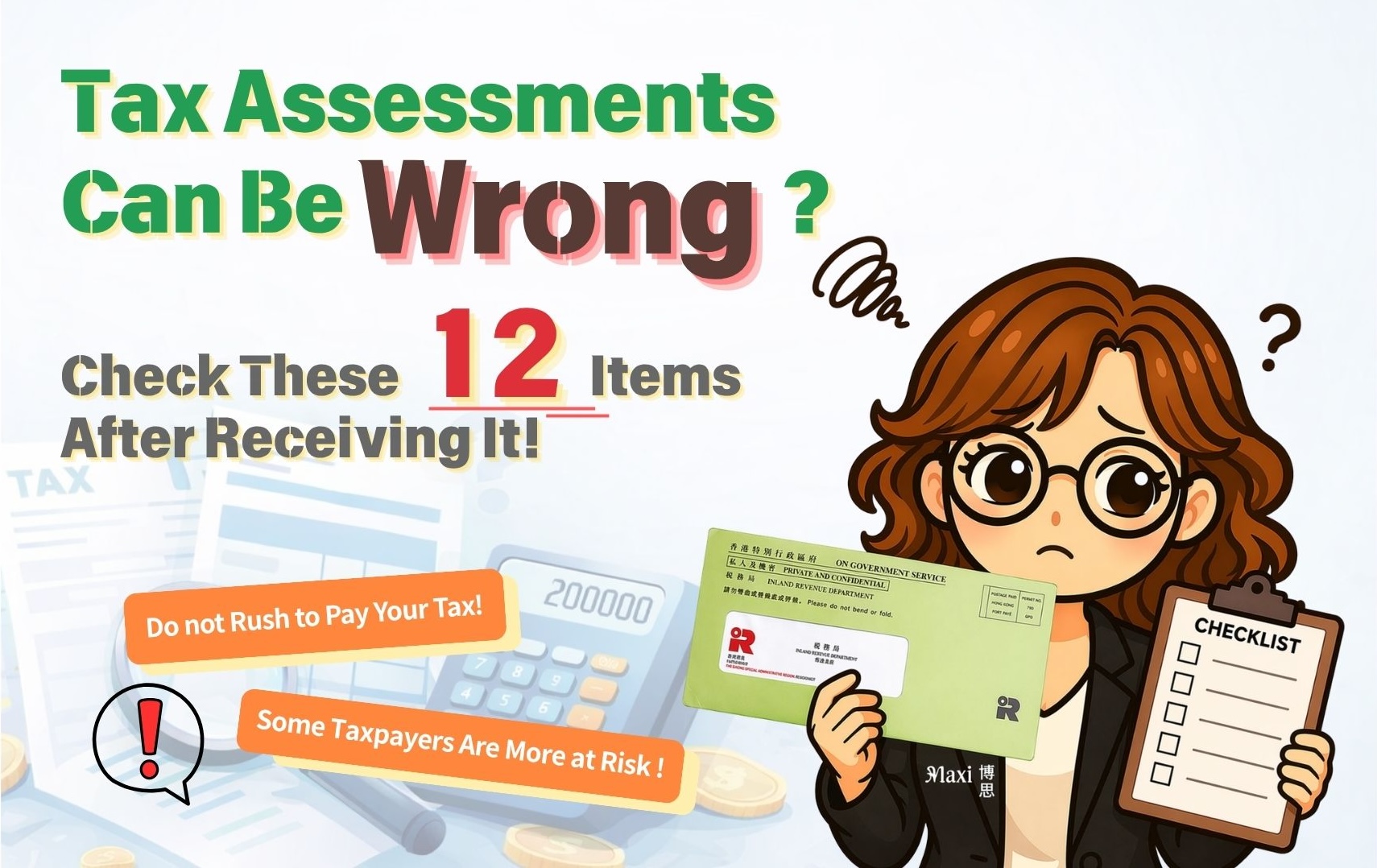
Tax Assessments Can Be Wrong? Check These 12 Items Carefully Before You Pay!

Every year, when people receive their tax assessment, many of them immediately think about paying it as soon as possible so they will not delay the matter.
However, the information shown on a tax assessment may contain errors or omissions. For example, allowances may not have been included, income figures may be incorrect, or incomplete information may cause the tax payable to be higher than it should be.
For taxpayers, the most important thing is not to rush into payment, but to first check carefully whether the content is correct. In many cases, it is not because you reported something wrongly, but because the tax assessment itself may have omitted or miscalculated certain details, causing you to pay more tax than necessary.
This time, Amy from Maxi Consultant will briefly explain the following 3 key points:
- What should you check first after receiving a tax assessment?
- What are the common mistakes found in an incorrect tax assessment?
- What should you do if you find a problem with your tax assessment?
What should you check first after receiving a tax assessment?
After receiving your tax assessment, the first step is not to rush into payment, but to check whether the basic information is correct.
It is recommended that you first check the following items:
- Personal particulars
- Year of assessment
- Income amount
- Married person’s allowance
- Child allowance
- Dependent parent and dependent grandparent allowance
- Additional dependent parent and dependent grandparent allowance
- Self education expenses
- Home loan interest
10. Qualified premiums paid under the Voluntary Health Insurance Scheme
11. Domestic rent deduction
12. Approved charitable donations
If even one of these items is wrong, the final amount of tax payable may be significantly affected.
If you have changed jobs, claimed allowances, or have circumstances involving dependent parents, children, self education expenses, or similar claims, you should pay even more attention. Once these items are not properly reflected, the tax assessment may miss certain deductions or allowances, causing you to pay more tax than necessary.
What are the common mistakes found in an incorrect tax assessment?
Tax assessment errors often come from details that may look minor on the surface, but can have a major impact.
The most common situations include missing allowances, an income figure with an extra digit, or deduction items that were not accepted.
👉 In reality, the situation can be even more serious than you imagine:
One client discovered that the Inland Revenue Department had added an extra zero to the income amount. As a result, the tax payable increased significantly. Fortunately, the issue was checked in time by professionals and an objection was lodged immediately. In the end, the client successfully saved $200,000.
Therefore, when you receive your tax assessment, you should not only look at the final tax payable. You should also go back and check how the whole assessment was calculated. In many cases, the error is not in the tax rate itself, but in whether the earlier information was correct.
What should you do if you find a problem with your tax assessment?
If you suspect that there is a problem after checking your tax assessment, do not ignore it, and do not pay it simply because you want to avoid trouble. Once the information is wrong, dealing with it early is usually much easier than trying to fix it later.
You can first prepare the relevant supporting documents, such as:
- Income proof
- Previous tax return records
- Allowance proof or other relevant documents
Then you can further confirm whether the issue came from missing information in your own tax filing, or whether the tax assessment itself did not reflect the information correctly. If the situation is unclear, it is safer to seek professional help to review it for you.
💡 Amy’s Tip
Receiving a tax assessment does not mean that everything on it is definitely correct. This is especially true if you have changed jobs, had changes in income, or applied for allowances. In these cases, you should check carefully before deciding what to do next.
Sometimes, the tax is not something you must definitely pay in full. It may simply be that you could have paid less, but you did not realise that something had been omitted.
Not Sure About Your Tax Assessment? Speak to Amy
If you have received a tax assessment but are not sure whether the income, allowances, or tax calculation is correct, you may wish to ask Amy from Maxi Solution to help you check it first.
We can help you:
✔ Review whether there are errors or omissions in your tax assessment
✔ Check whether any allowances or deduction items have been left out
✔ Reduce the risk of overpaying tax because of incorrect information
👉 For enquiries about tax assessment, click here to contact us.
📲 WhatsApp / WeChat: (852) 5236 2580
☎️ Enquiry Hotline: 2761 0139
🔔 To receive regular updates on accounting, taxation, and company compliance matters, follow our Facebook page: https://www.facebook.com/maxiconsultant/
Related Articles
・ Why You Should Open Tax Letter Immediately!
・ Hong Kong Tax Tips: Avoid Fines and How to Make Things Right
・ Voluntary Health Insurance Tax Deduction: 4 Common Mistakes That Could Cost You a Claim
・ Tax Traps: Is “Self-Education” Always Tax-Deductible?
#TaxSeason #TaxMatters #TaxTips #SmartTaxMoves #TaxFiling #TaxBill #Taxation #TaxAllowance #TaxDeduction #TaxReturn #TaxPlanning #TaxTips #AccountantLife #CPA #tax #accounting #Maxi #limited company #unlimited company #MaxiAmy